look
Why Stars Wink
5 min · Eve · Quiet listening
Eve
Why Stars Wink
Eve is reading this story.
Eve is ready
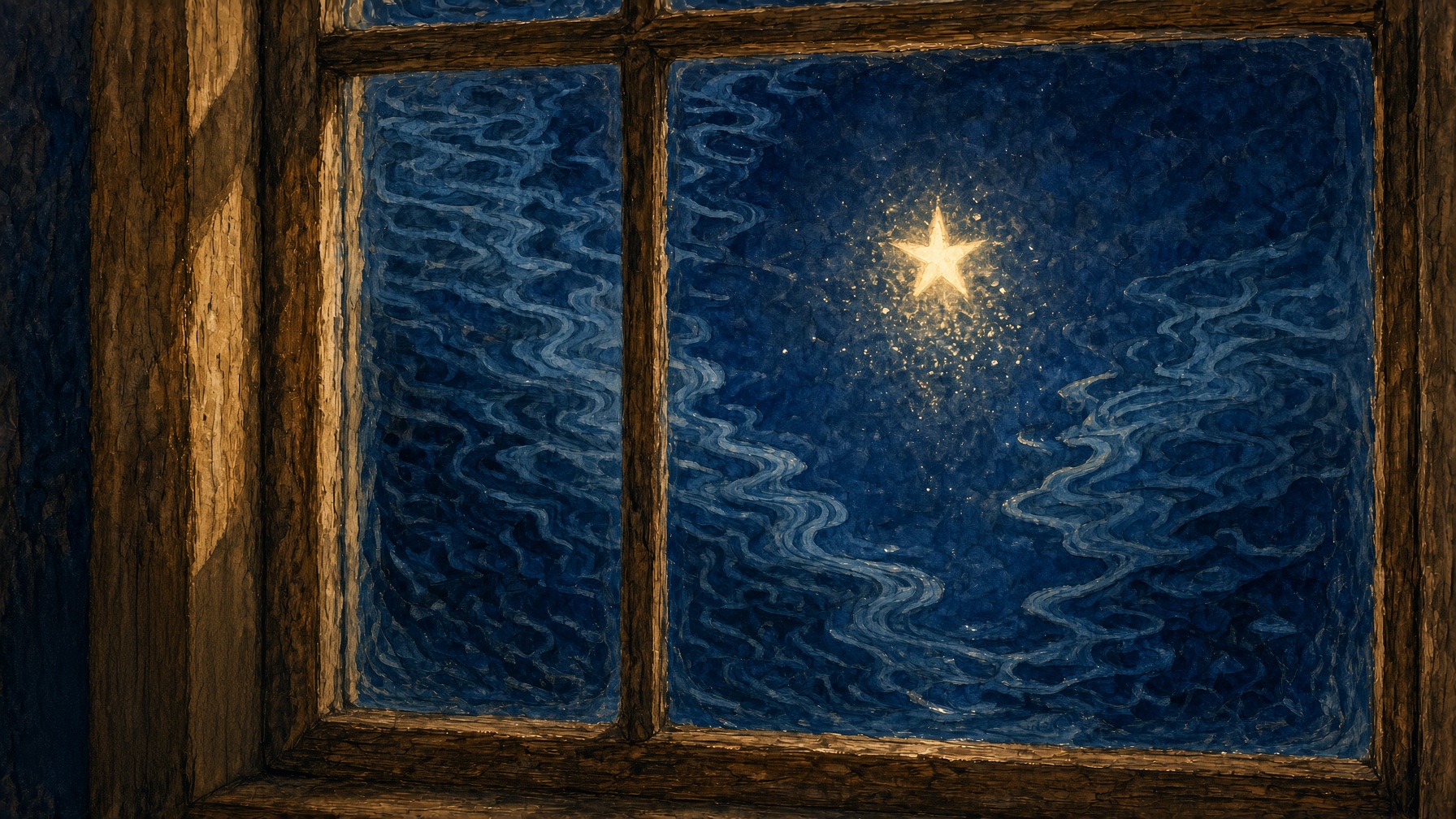
The star is not dancing. You are looking through an ocean of air. Earth wears a blanket of atmosphere, always moving, warmer here, cooler there. Starlight has to travel through all of it. The moving air bends that tiny beam. To you, the star twinkles.
Look closer
The air between you
Drag the thickness of the air. The star does not change. The path home does.
The air still bends its light, but light from different parts of the disk averages much of the wobble out. The planet looks calmer. This is one way to tell a bright planet from a bright star: the one that holds steadier is often a world.
How sure are we?
We know
Twinkling happens in Earth's air, not on the star.
We know
Planets usually appear steadier because they are tiny disks, not points.
The evidence suggests
On a very unsteady night, even planets can shimmer a little.
Try it tonight
- Find a bright point in the sky.
- Watch it for thirty seconds. Does it wink?
- Find another bright point that holds still. That calmer light may be a planet.
- If you can, compare a star high overhead with a star low near the horizon. The lower one often winks more. You are looking through more air.
How we know
Put a telescope in space, or even on a high dry mountain, and the twinkle fades. The stars have not changed. The air has. Adaptive-optics telescopes measure the twinkle thousands of times a second and bend a mirror to cancel it.
- Sky & Telescope, Why do stars twinkle?
- NASA, Stargazing basics
If you wondered
The Stars the City Hides
The wink is one reason a star is hard to see. City light is another.
The Little Points That Moved
Some calm bright points are worlds, and they have moons.
Why Stars Have Colors
While you are looking, notice color too.
The Star That Points North
One star seems to hold still for another reason.